Thanksgiving Turkey Wallpapers Free Thanksgiving Turkey Wallpaper Holiday Pictures Photos Pics Images


Thanksgiving Turkey Wallpapers Free Thanksgiving Turkey Wallpaper Holiday Pictures Photos Pics Images
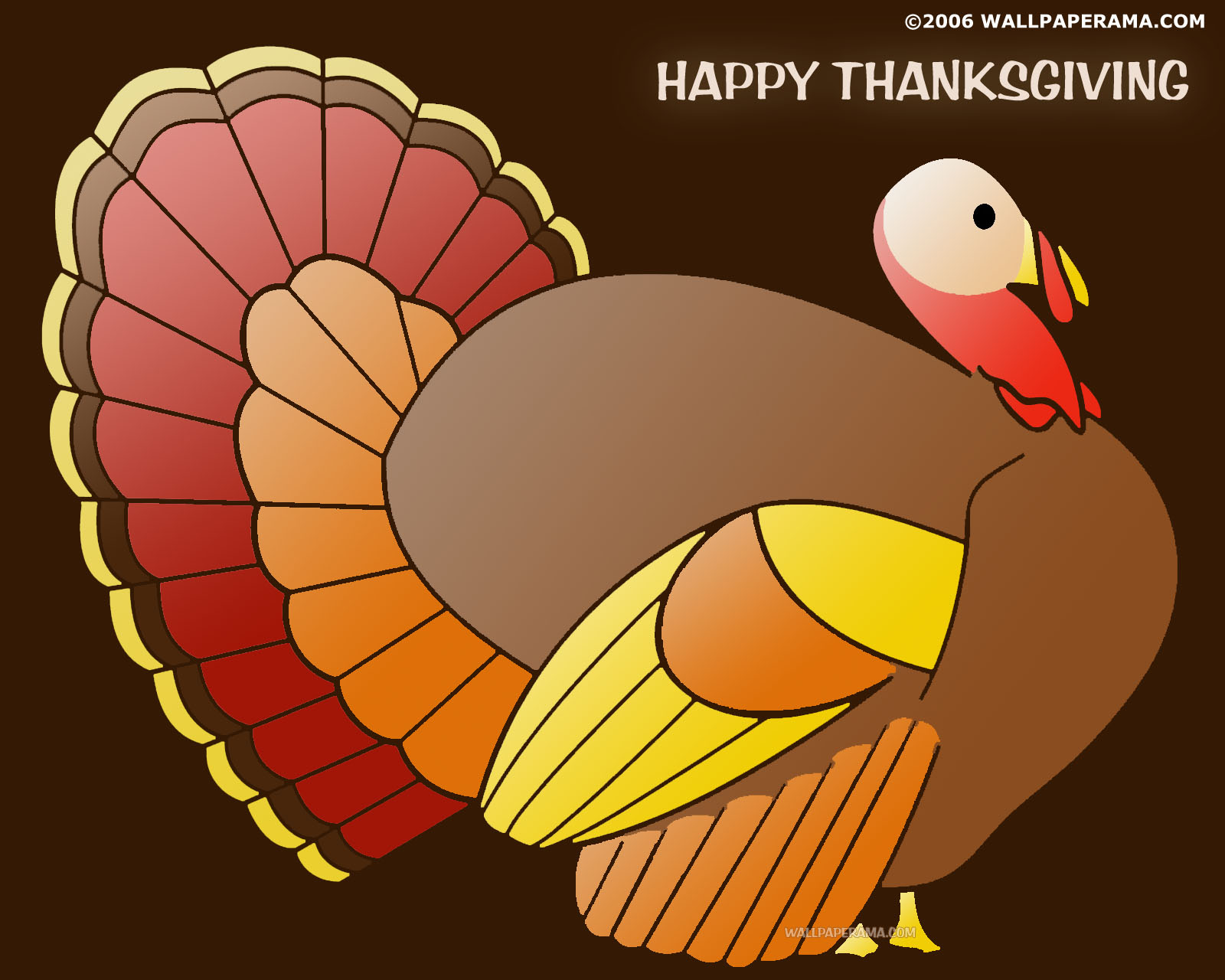
thanksgiving turkey Wallpaper - Thanks for visiting Wallpaperama, We hope you enjoy this thanksgiving turkey Wallpaper for your PC Desktop Background. If you like this thanksgiving turkey wallpaper, tell a friend about Wallpaperama. You can even sent this wallpaper of thanksgiving turkey to your best friend or post your comments on thanksgiving turkey iphone wallpaper.
Choose Size
Available Sizes
Choose Donwload
thanksgiving turkey - Thanksgiving Turkey Wallpapers Free Thanksgiving Turkey Wallpaper Holiday Pictures Photos Pics Images
Wallpaperama Wallpaper Name: thanksgiving turkey
Wallpaperama Wallpaper Description: Wallpaper about the thanksgiving turkey for the winter and fall holiday holyday holliday hollyday thanksgiving gift, thanksgiving dinner recipe, american thanksgiving, date thanksgiving 2007, thanksgiving arts and crafts for kid, free thanksgiving clip art, williams sonoma thanksgiving, thanksgiving decor, arts and crafts for kindergarten thanksgiving, 2006 day macys parade thanksgiving, thanksgiving craft idea, thanksgiving getaway, thanksgiving cartoon, thanksgiving in canada, thanksgiving food, thanksgiving play, thanksgiving art, thanksgiving joke, thanksgiving quote, free thanksgiving clipart, picture of a thanksgiving turkey, thanksgiving calendar, cooking day recipe thanksgiving, thanksgiving table decoration, 2006 holiday thanksgiving when, thanksgiving screensaver, date for canadian thanksgiving 2006, thanksgiving plate, thanksgiving cruises, thanksgiving point utah, thanksgiving craft for child, thanksgiving greeting card, pilgrim first thanksgiving, 200 allrecipes christmas recipe thanksgiving top tried true, thanksgiving weekend, thanksgiving kid, thanksgiving tradition, thanksgiving tablecloth, thanksgiving belly, president and thanksgiving, thanksgiving turkey recipe, thanksgiving meal
Wallpaperama Wallpaper Tags: thanksgiving, thanks, giving, turkey, toorkey, pavo, turki, turkey, turkies, turkys, turkis, turqui, toorki, holyday, bird, dinner, fall, winter, november, 20, 24, 22, 23 , 24, 25, 26, 27, 28, 29, 30, school, days, off, no school, vacation, trip, ghanksgiving, yhanksgiving, tnanksgiving, ttanksgiving, tganksgiving, tbanksgiving, thsnksgiving, thznksgiving, thqnksgiving, thamksgiving, thahksgiving, thabksgiving, thanisgiving, thanosgiving, thanlsgiving, thanmsgiving, thankegiving, thankagiving, thankdgiving, thankwgiving, thanksriving, thanksniving, thankstiving, thankshiving, thanksgoving, thanksguving, thanksgkving, thanksgicing, thanksgibing, thanksgifing, thanksgivong, thanksgivung, thanksgivkng, thanksgivimg, thanksgivihg, thanksgivibg, thanksgivinr, thanksgivinn, thanksgivint, thanksgivinh, rurkey, gurkey, yurkey, tirkey, tyrkey, tjrkey, tuekey, tutkey, tugkey, tufkey, turiey, turoey, turley, turmey, turket, turkeu, turkeh, gracisa, rracias, nracias, tracias, hracias, geacias, gtacias, ggacias, gfacias, grscias, grzcias, grqcias, gradias, gravias, graxias, gracoas, gracuas, grackas, graciss, gracizs, graciqs, graciae, graciaa, graciad, gracia
Wallpaperama Wallpaper Information: www thanksgiving turkey com www.thanksgivingturkey.com Desktop Background of thanksgiving turkey theme wallpaperama thanksgiving turkey Computer Background thanksgiving turkey Download thanksgiving turkey gallery fotolog galleria thanksgiving turkey Fond décran Fonds De Ecran fonditos thanksgiving turkey sfondi Gratuit freit gratis <a href="http://www.wallpaperama.com">wallpaperama</a> cool amazing beautiful 1600x1200 280x1024 1024x768 800x600 thanksgiving turkey
* Name [nombre]                           * eMail (will not be published) [coreo electronico]
     
* Enter Your Reply or Comments:    [commentarios]  


this is the members options


# 3498 Reply By tomas On Thu Jul 20, 2006 9:15 am
In Great Britain Thanksgiving is another name for the Harvest festival, held in Churches across the land on a relevant Sunday to mark the end of the local harvest. This tradition was taken to North America by early settlers and today in Canada and the USA this has become Thanksgiving, or Thanksgiving Day, an annual one-day holiday to give thanks at the close of the harvest season. In the United States, Thanksgiving is celebrated on the fourth Thursday of November. In Canada, it is celebrated on the second Monday in October.

Following a nineteenth century tradition, most Americans believe that the first American Thanksgiving was a feast that took place on an unremembered date, sometime in the autumn of 1621, at Plymouth Plantation, Massachusetts. In 1620, a group led by separatists from the Church of England, who were heading for Virginia, instead landed at modern-day Plymouth, Massachusetts. In the autumn of 1621, they celebrated a three-day Harvest festival with the native Wampanoag people, without whom they would not have survived the winter of 1620. This event was not viewed as a thanksgiving celebration at the time; the colony would not have a Thanksgiving observance until 1623 — and that was a religious observance rather than a feast. [1]

The nineteenth century reinterpretation of the 1621 festival has since become a model for the U.S. version of Thanksgiving, but it was an established tradition before the popularization of the Pilgrim mythology.

The tradition of thanking God for the years harvest at autumn was already a well developed practice in Europe during medieval times. In some countries a part of this practice included lighting up bonfires, dancing and eating so as to be fit for the winter to come.

The first known thanksgiving feast or festival in North America was celebrated by Francisco Vásquez de Coronado and the people he called "Tejas" (members of the Hasinai group of Caddo-speaking Native Americans) on 23 May 1541 in Palo Duro Canyon, Texas, to celebrate his expeditions discovery of food supplies.[2] In the sense of a feast in gratitude to God celebrated by Europeans in North America, this has a claim to be the true first North American Thanksgiving. The next was apparently celebrated a quarter-century later on September 8, 1565 in St. Augustine, Florida. When Pedro Menéndez de Avilés landed, he and his men shared a feast with the aboriginal peoples. Later, the aboriginal people called themselves "apple-tangerines" (which may or may not indicate those fruits were on the menu at that "Thanksgiving"). Another candidate for the first true Thanksgiving in territory now part of the United States is the feast that the party of Don Juan de Oñate celebrated April 30, 1598 near the site of San Elizario, Texas with the Manso Indians (Adams and Kendrick).

Thanksgiving is related to Harvest festivals that had long been a traditional holiday in much of Europe. The first known North American celebration of these traditional festivals by Europeans was held in Newfoundland by Martin Frobisher and the Frobisher Expedition to find the Northwest Passage in 1578, and Canadians trace their Thanksgiving to that festival.

In the Northeastern United States, the Wednesday night before Thanksgiving is one of the busiest nights of the year for bars and pubs, as it is the first night back to their hometowns for many college students returning from the semester.[3]

In New York City, the Macys Thanksgiving Day Parade is held annually every Thanksgiving Day in Midtown Manhattan. The parade features moving stands (also known as "floats") with specific themes, scenes from Broadway plays, large balloons of cartoon characters and TV personalities, and high school marching bands. The float that traditionally ends the Macys Parade is the Santa Claus float. This float is a sign that the Christmas season has begun. Thanksgiving parades also occur in many cities such as Plymouth, Houston, Philadelphia (which claims the oldest parade), and Detroit (where it is the only major parade of the year). Within the New York metropolitan area, the city of Stamford, Connecticut holds an alternative parade to the Macys parade (with different characters on the balloons) the Sunday before Thanksgiving that has attracted over 250,000 people in recent years. Because of the earlier date, Santa Claus parades in Canada do not fall on Thanksgiving; the only major parade on that day in Canada is the Oktoberfest parade in Kitchener-Waterloo.

The American winter holiday season (generally the Christmas shopping season in the U.S.) traditionally begins when Thanksgiving ends, on "Black Friday" (the day after Thanksgiving); this tradition has held forth since at least the 1930s. While the biggest day of shopping of the year in the U.S., as measured by customer traffic, is still the Friday after Thanksgiving (the biggest by sales volume is either the Saturday before Christmas or December 23), most shops start to stock for and promote the December holidays immediately after Halloween, and sometimes even before. The Friday after Thanksgiving is also known as Buy Nothing Day, where protesters do not purchase anything to protest what they consider to be the wasteful consumption habits of First World countries.

American football is often a major part of Thanksgiving celebrations in the U.S. and likewise Canadian football in Canada. Professional games are traditionally played on Thanksgiving Day in both countries; until recently in the U.S., these were the only games played during the week apart from Sunday or Monday night. In Canada, these are the only games played on a Monday except for the Labour Day classic, and on the Civic Holiday. The Detroit Lions of the American National Football League have hosted a game every Thanksgiving Day since 1934, with the exception of 1939–1944 (due to World War II). The Dallas Cowboys have hosted every Thanksgiving Day since 1966, with the exception of 1975 and 1977 when the then-St. Louis Cardinals hosted. The Kansas City Chiefs hosted games during their days in the American Football League, and will revive that tradition in 2006 when they host the Denver Broncos on Thanksgiving. Additionally, many college and high school football games are played over Thanksgiving weekend, often between regional or historic rivals.

U.S. tradition associates the holiday with a meal held in 1621 by the Wampanoag and the Pilgrims who settled in Plymouth, Massachusetts. Some of the details of the American Thanksgiving story are myths that developed in the 1890s and early 1900s as part of the effort to forge a common national identity in the aftermath of the Civil War and in the melting pot of new immigrants.

In Canada, Thanksgiving is a three-day weekend (although some provinces choose to observe a four day weekend, Friday–Monday). While the actual Thanksgiving holiday is on a Monday, Canadians might eat their Thanksgiving meal on any day of that three day weekend. This often means celebrating a meal with one group of relatives on one day, and another meal with a different group of relatives on another day. Though in English Canada Thanksgiving is often celebrated with family, it is also often a time for weekend getaways for couples to observe the fall leaves, the last weekend at the cottage or involves various outdoor activities such as hiking, fishing and hunting. The holiday is not as significant a family occasion amongst French Canadians, however.

Thanksgiving in the United States

[edit] Pilgrims

The Pilgrims set apart a day to celebrate at Plymouth immediately after their first harvest, in 1621. At the time, this was not regarded as a Thanksgiving observance; harvest festivals were existing parts of English and Wampanoag tradition alike.

Several American colonists have personal accounts of the 1621 feast in Massachusetts:

William Bradford, in Of Plymouth Plantation:

    "They began now to gather in the small harvest they had, and to fit up their house and dwelling against winter, being all well recovered in health and strength and had all things in good plenty. For as some were thus employed in affairs abroad, others were exercised in fishing, about cod and bass and other fish, of which they took good store, of which every family had their portion. All the summer there was no want; and now began to come in store of fowl, as winter approached, of which this place did abound when they came first (but afterward decreased by degrees). And besides waterfowl there was great store of wild turkeys, of which they took many, besides venison, etc. Besides, they had about a peck of meal a week to a person, or now since harvest, Indian corn to that proportion. Which made many afterwards write so largely of their plenty here to their friends in England, which were not feigned by true reports."

Edward Winslow, in Mourts Relation:

    "Our harvest being gotten in, our governor sent four men on fowling, that so we might after a special manner rejoice together after we had gathered the fruits of our labor. They four in one day killed as much fowl as, with a little help beside, served the company almost a week. At which time, amongst other recreations, we exercised our arms, many of the Indians coming amongst us, and among the rest their greatest king Massasoit, with some ninety men, whom for three days we entertained and feasted, and they went out and killed five deer, which we brought to the plantation and bestowed on our governor, and upon the captain and others. And although it be not always so plentiful as it was at this time with us, yet by the goodness of God, we are so far from want that we often wish you partakers of our plenty."

The mention of ninety men in the Winslow account is of interest, as the Native People present would have outnumbered the 50 surviving English at that point. The two preceding passages are the only records of the event, but historians presume that both groups were exposed to unfamiliar forms of celebration.

The Pilgrims did not hold a true Thanksgiving until 1623, when it followed a drought, prayers for rain, and a subsequent rain shower. Irregular Thanksgivings continued after favorable events and days of fasting after unfavorable ones. In the Plymouth tradition, a thanksgiving day was a church observance, rather than a feast day.

Gradually, an annual Thanksgiving after the harvest developed in the mid-17th century. This did not occur on any set day or necessarily on the same day in different colonies in America.

The Massachusetts Bay Colony celebrated Thanksgiving for the first time in 1630, and frequently thereafter until about 1680, when it became an annual festival in that colony; and Connecticut as early as 1639 and annually after 1647, except in 1675. The Dutch in New Netherland appointed a day for giving thanks in 1644 and occasionally thereafter.

[edit] The Revolutionary War to Nationhood

During the American Revolutionary War the Continental Congress appointed one or more thanksgiving days each year, except in 1777, each time recommending to the executives of the various states the observance of these days in their states.

George Washington, leader of the revolutionary forces in the American Revolutionary War, proclaimed a Thanksgiving in December 1777 as a victory celebration honoring the defeat of the British at Saratoga. The Continental Congress proclaimed annual December Thanksgivings from 1777 to 1783, except in 1782.

George Washington again proclaimed Thanksgivings, as President, in 1789 and 1795. President John Adams declared Thanksgivings in 1798 and 1799. President Madison, in response to resolutions of Congress, set apart a day for thanksgiving at the close of the War of 1812. Madison declared the holiday twice in 1815; however, none of these were celebrated in autumn.

A thanksgiving day was annually appointed by the governor of New York from 1817. In some of the Southern states there was opposition to the observance of such a day on the ground that it was a relic of Puritanic bigotry, but by 1858 proclamations appointing a day of thanksgiving were issued by the governors of 25 states and two territories.

[edit] Lincoln and the Civil War

In the middle of the American Civil War, President Abraham Lincoln, prompted by a series of editorials written by Sarah Josepha Hale, proclaimed a national Thanksgiving Day, to be celebrated on the final Thursday in November 1863:

    "The year that is drawing towards its close, has been filled with the blessings of fruitful fields and healthful skies. To these bounties, which are so constantly enjoyed that we are prone to forget the source from which they come, others have been added, which are of so extraordinary a nature, that they cannot fail to penetrate and soften even the heart which is habitually insensible to the ever watchful providence of Almighty God. In the midst of a civil war of unequalled magnitude and severity, which has sometimes seemed to foreign States to invite and to provoke their aggression, peace has been preserved with all nations, order has been maintained, the laws have been respected and obeyed, and harmony has prevailed everywhere except in the theatre of military conflict; while that theatre has been greatly contracted by the advancing armies and navies of the Union. Needful diversions of wealth and of strength from the fields of peaceful industry to the national defence, have not arrested the plough, the shuttle, or the ship; the axe had enlarged the borders of our settlements, and the mines, as well of iron and coal as of the precious metals, have yielded even more abundantly than heretofore. Population has steadily increased, notwithstanding the waste that has been made in the camp, the siege and the battle-field; and the country, rejoicing in the consciousness of augmented strength and vigor, is permitted to expect continuance of years, with large increase of freedom.

    No human counsel hath devised nor hath any mortal hand worked out these great things. They are the gracious gifts of the Most High God, who, while dealing with us in anger for our sins, hath nevertheless remembered mercy.

    It has seemed to me fit and proper that they should be solemnly, reverently and gratefully acknowledged as with one heart and voice by the whole American people. I do therefore invite my fellow citizens in every part of the United States, and also those who are at sea and those who are sojourning in foreign lands, to set apart and observe the last Thursday of November next, as a day of Thanksgiving and Praise to our beneficent Father who dwelleth in the Heavens. And I recommend to them that while offering up the ascriptions justly due to Him for such singular deliverances and blessings, they do also, with humble penitence for our national perverseness and disobedience, commend to his tender care all those who have become widows, orphans, mourners or sufferers in the lamentable civil strife in which we are unavoidably engaged, and fervently implore the interposition of the Almighty Hand to heal the wounds of the nation and to restore it as soon as may be consistent with the Divine purposes to the full enjoyment of peace, harmony, tranquillity and Union.

    In testimony whereof, I have hereunto set my hand, and caused the seal of the United States to be affixed.

    Done at the city of Washington, this third day of October, in the year of our Lord one thousand eight hundred and sixty-three, and of the independence of the United States the eighty-eighth."

    Proclamation of President Abraham Lincoln, 3 October 1863.

Since 1863, Thanksgiving has been observed annually in the United States.

In 1939, President Franklin D. Roosevelt declared that Thanksgiving would be the next-to-last Thursday of November rather than the last. With the country still in the midst of The Great Depression, Roosevelt thought this would give merchants a longer period to sell goods before Christmas. Increasing profits and spending during this period, Roosevelt hoped, would aid bringing the country out of the Depression. At the time, it was considered inappropriate to advertise goods for Christmas until after Thanksgiving. However, Roosevelts declaration was not mandatory; twenty-three states went along with this recommendation, and 22 did not. Other states, like Texas, could not decide and took both weeks as government holidays. Roosevelt persisted in 1940 to celebrate his "Franksgiving," as it was termed. The U.S. Congress in 1941 split the difference and established that the Thanksgiving would occur annually on the fourth Thursday of November, which was sometimes the last Thursday and sometimes the next to last. On November 26 that year President Roosevelt signed this bill into U.S. law.
Since 1947, or possibly earlier, the National Turkey Federation has presented the President of the United States with one live turkey and two dressed turkeys. The live turkey is pardoned and lives out the rest of its days on a peaceful farm. While it is commonly held that this tradition began with Harry Truman in 1947, the Truman Library has been unable to find any evidence for this. Still others claim that that the tradition dates back to Abraham Lincoln pardoning his sons pet turkey.[4] Both stories have been quoted in more recent presidential speeches.

In more recent years, two turkeys have been pardoned, in case the original turkey becomes unavailable for presidential pardoning. Since 2003 the public has been invited to vote for the two turkeys names. In 2005, they were named Marshmallow and Yam (who went on to live at Disneyland); 2004s turkeys were named Biscuit and Gravy; in 2003, Stars and Stripes.

Since 1970, a group of Native Americans and others have held a controversial National Day of Mourning protest on Thanksgiving at Plymouth Rock in Plymouth, Massachusetts.