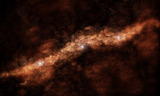
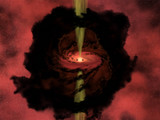
Infrared Saturn Wallpapers Free Infrared Saturn Wallpaper Space Pictures Photos Pics Images
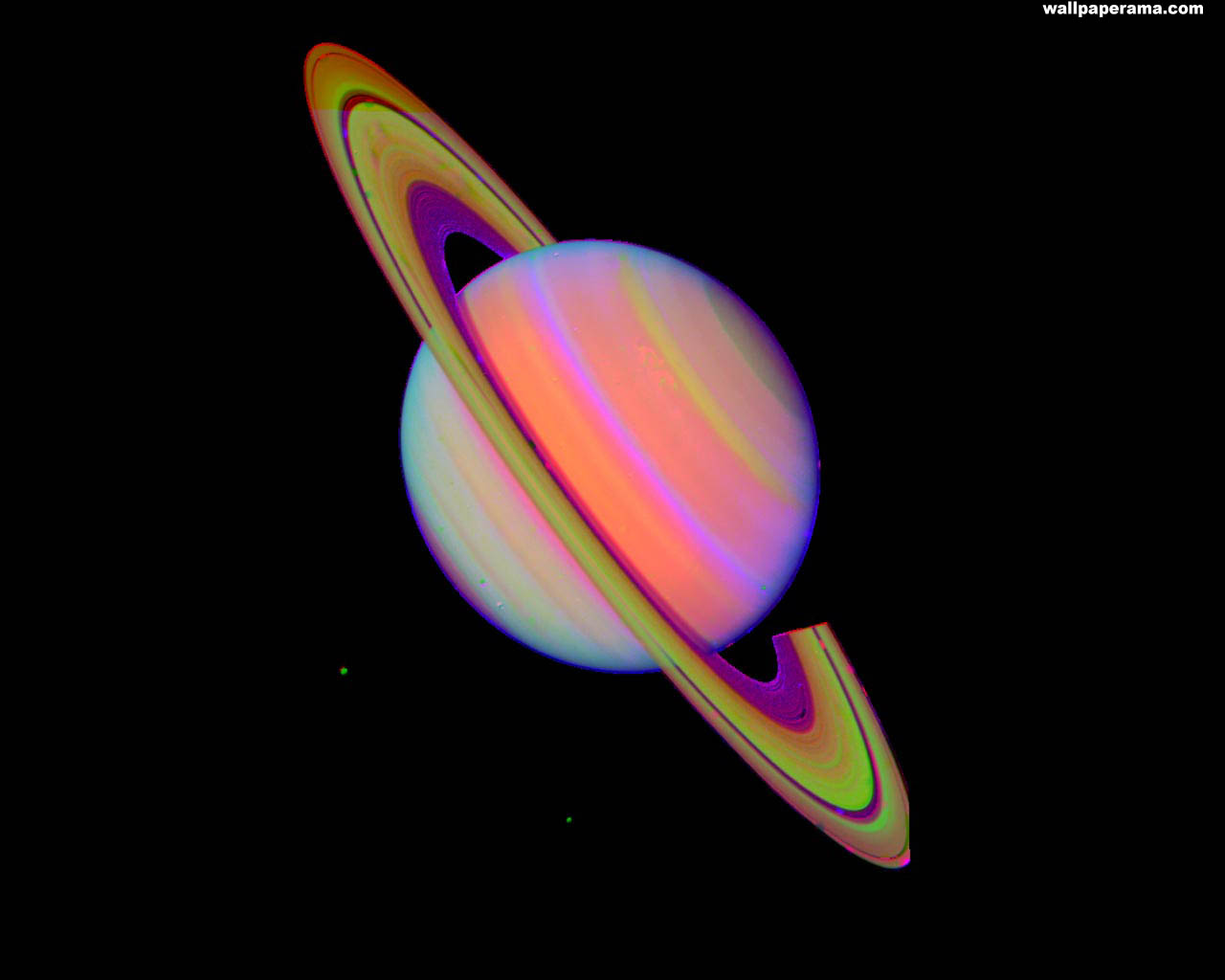


Infrared Saturn Wallpapers Free Infrared Saturn Wallpaper Space Pictures Photos Pics Images
infrared saturn Wallpaper - Thanks for visiting Wallpaperama, We hope you enjoy this infrared saturn Wallpaper for your PC Desktop Background. If you like this infrared saturn wallpaper, tell a friend about Wallpaperama. You can even sent this wallpaper of infrared saturn to your best friend or post your comments on infrared saturn iphone wallpaper.
Choose Size
Available Sizes
Choose Donwload
infrared saturn - Infrared Saturn Wallpapers Free Infrared Saturn Wallpaper Space Pictures Photos Pics Images
Wallpaperama Wallpaper Name: infrared saturn
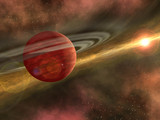
Wallpaperama Wallpaper Description: Infrared wallpaper, saturn wallpaper, hot, red planet,
Wallpaperama Wallpaper Tags:
Wallpaperama Wallpaper Information: www infrared saturn com www.infraredsaturn.com Desktop Background of infrared saturn theme wallpaperama infrared saturn Computer Background infrared saturn Download infrared saturn gallery fotolog galleria infrared saturn Fond décran Fonds De Ecran fonditos infrared saturn sfondi Gratuit freit gratis <a href="http://www.wallpaperama.com">wallpaperama</a> cool amazing beautiful 1600x1200 280x1024 1024x768 800x600 infrared saturn
* Name [nombre]                           * eMail (will not be published) [coreo electronico]
     
* Enter Your Reply or Comments:    [commentarios]  


this is the members options


# 3442 Reply By Mario On Thu Jul 20, 2006 9:15 am
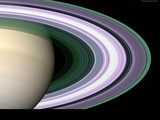
Saturn is the sixth planet from the Sun. It is a gas giant, the second-largest planet in the solar system after Jupiter. Saturn has a prominent system of rings, consisting of mostly ice particles with a smaller amount of rocky debris. It was named after the Roman god Saturn. Its symbol is a stylized representation of the god's sickle. Saturn is probably best known for its planetary rings, which make it one of the most visually remarkable objects in the solar system.BR>

The Planet Saturn is the second largest planet. It is the next planet after Jupiter. Saturn is named after a Roman God and is famous for its beautiful rings. It has at least 31 moons. These include Titan, Hyperion, Mimas, Enceladus, Rhea, and Phoebe. Saturn has been visited in flybys in the 1970s by NASA's Pioneer 11 and in 1980-81 by the Voyager 1 and 2 spacecraft.
The Cassini spacecraft, launched in 1997 arrived at Saturn in July 2004. The Hugens probe will explore the moon -Titan. BR>

Saturn is an oblate spheroid. It is flattened at the poles and bulging at the equator; its equatorial and polar diameters vary by almost 10% (120,536 km vs. 108,728 km). This is the result of its rapid rotation and fluid state. The other gas planets are also oblate, but to a lesser degree. Saturn is also the only one of the Solar System's planets less dense than water, with an average specific density of 0.69. This is only an average value, however; Saturn's upper atmosphere is less dense and its core is considerably more dense than water.
BR>
Saturn's interior is similar to Jupiter's, having a rocky core at the center, a liquid metallic hydrogen layer above that, and a molecular hydrogen layer above that. Traces of various ices are also present. Saturn has a very hot interior, reaching 12000 K at the core, and it radiates more energy into space than it receives from the Sun. Most of the extra energy is generated by the Kelvin-Helmholtz mechanism (slow gravitational compression), but this alone may not be sufficient to explain Saturn's heat production. An additional proposed mechanism by which Saturn may generate some of its heat is the "raining out" of droplets of helium deep in Saturn's interior, the droplets of helium releasing heat by friction as they fall down through the lighter hydrogen.
BR>
Saturn's atmosphere exhibits a banded pattern similar to Jupiter's (in fact, the nomenclature is the same), but Saturn's bands are much fainter and they're also much wider near the equator. Saturn's winds are among the Solar System's fastest; Voyager data indicates peak easterly winds of 500 m/s (1116 mph)Solarviews. Saturn's finer cloud patterns were not observed until the Voyager flybys. Since then, however, Earth-based telescopy has improved to the point where regular observations can be made.
BR>
Saturn's usually-bland atmosphere occasionally exhibits long-lived ovals and other features common on Jupiter; in 1990 the Hubble Space Telescope observed an enormous white cloud near Saturn's equator which was not present during the Voyager encounters and in 1994 another, smaller storm was observed. The 1990 storm was an example of a Great White Spot, a unique but short-lived Saturnian phenomenon with a roughly 30-year periodicity. Previous Great White Spots were observed in 1876, 1903, 1933, and 1960, with the 1933 storm being the most famous. The careful study of these episodes reveals interesting patterns; if it holds another storm will occur in ~2020.(Kidger 1992)
BR>
Astronomers using infrared imaging have shown that Saturn has a warm polar vortex, and is the only planet in the solar system known to do so.
BR>
An apparently permanent hexagonal wave pattern around the polar vortex in the atmosphere at about 78°N was first noted in the Voyager images[4] [5]. HST imaging of the south polar region indicates the presence of a jet stream, but no strong polar vortex nor any hexagonal standing wave.